 Masterful Masters








Art code
Art code copied
You can't see it in full detail right now, but you certainly will on your wall soon!
Scroll to zoom in, drag to move the artwork.
Drag with your finger to move the artwork.

Already filled more than 375,000 walls!
Get even more inspired
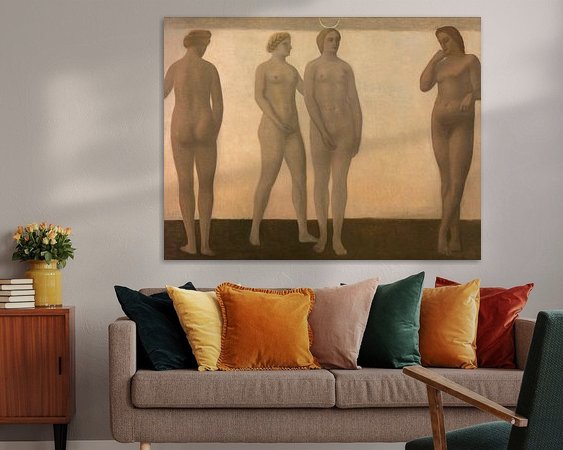
About ‘Artemis, Vilhelm Hammershøi’
Artemis, Vilhelm Hammershøi
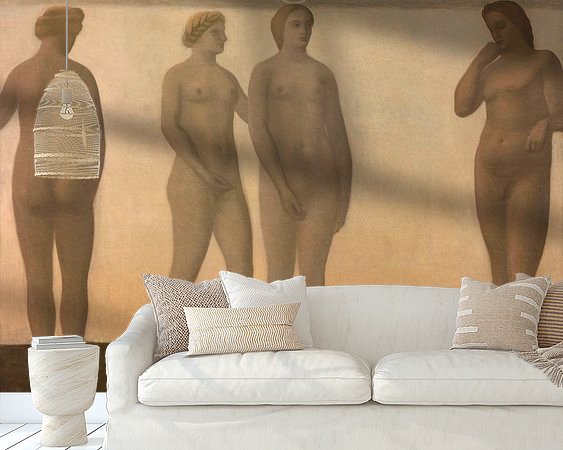
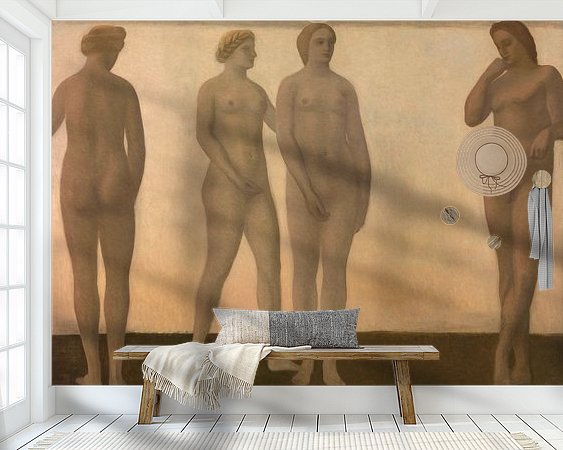
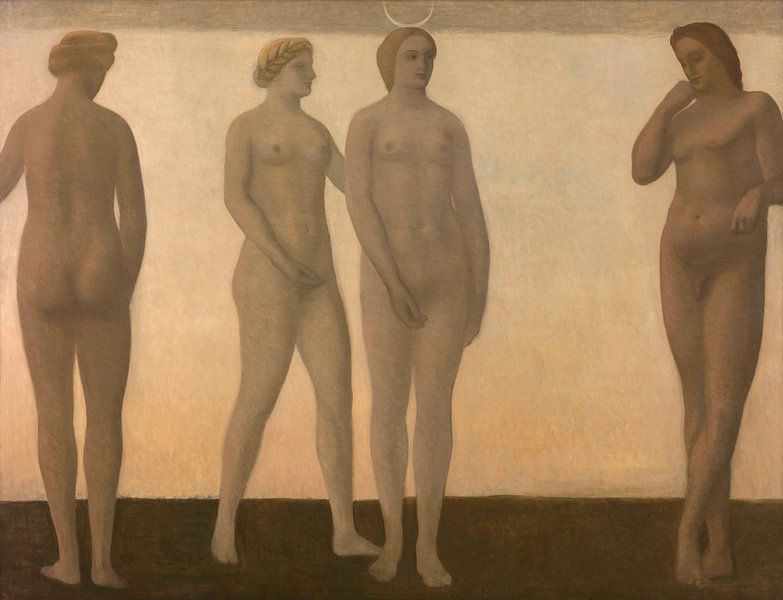
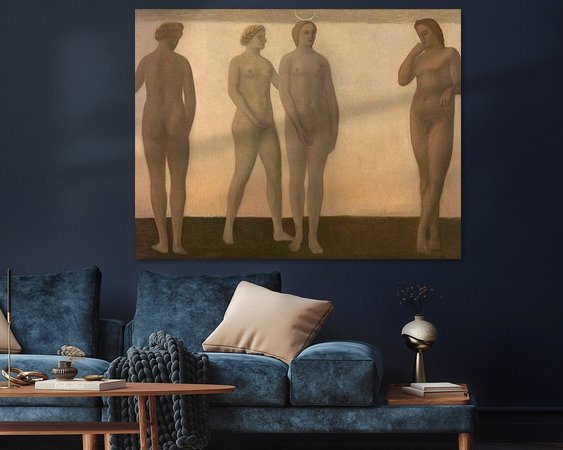
There is no physical space behind Hammershøi’s figures. The dark base acts more as a painted surface than as an illusion of a stage. The figures seem to exist independently of time and space, like images of ideas, perhaps representing a longing for a beauty that is not of this world.
Sublimation of man
Hammershøi painted out the fleshy elements of nudity in favour of an Arcadian concept of nudity as a pure, harmonic form. In Hammershøi’s painting, the goddess Artemis - crowned with a crescent moon - becomes the centre of a sublimation of man and all things human; an insistence on beauty and art as a soulful, condensed form.
Hammershøi's two history paintings
Alongside the darkened picture Job (1887), Artemis is Hammershøi’s only realised "history painting". A theme that inspires interpretation, but which also remains enigmatic. Spectators are left wondering and with a feeling of facing a mysterious and secretive motif that rejects our vain attempts at understanding the picture, at creating links.
Vilhelm Hammershøi often written in English Vilhelm Hammershoi (1864-1916), was a Danish painter. He is known for his poetic, subdued portraits and interiors.
Colors
Discover our Canvas
Classic and timeless material
Art on canvas looks great on any wall. It truly comes into its own with paintings featuring sharp brushstrokes.
- Fine-art quality
- Frame made from sustainable wood
- Durability of at least 10 years
- Available with shadow gap frame
Discover the Old Masters collection









Customer reviews
4.8/5