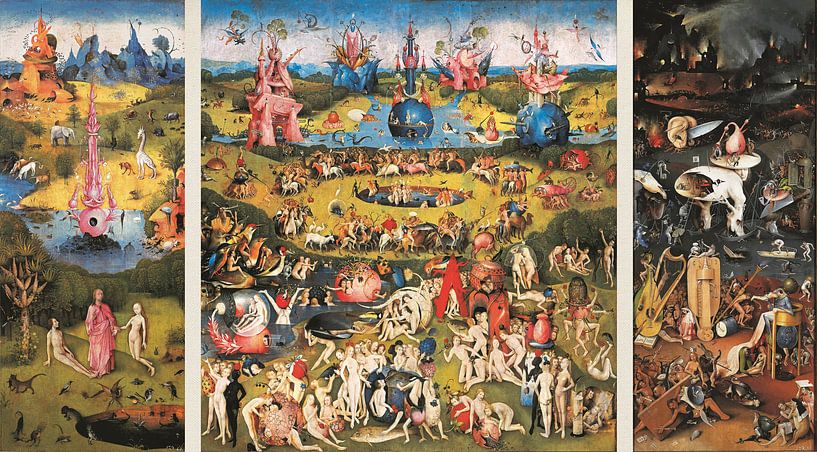

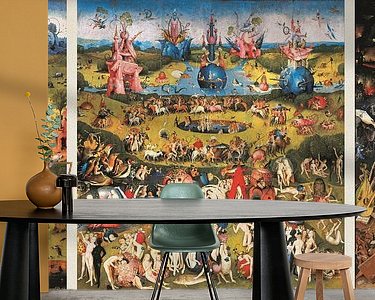
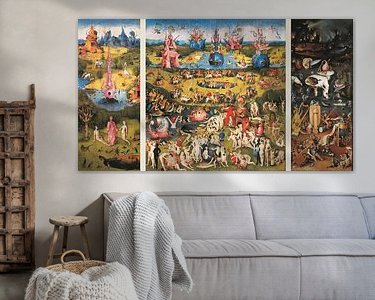

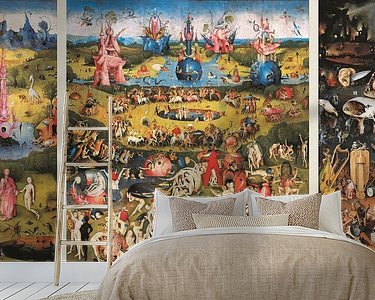
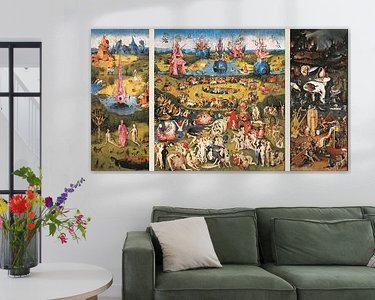
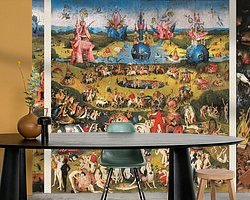

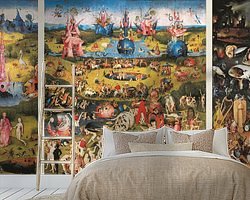
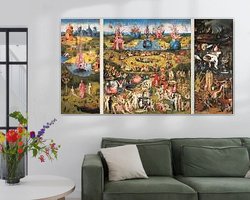


* Very beautiful triptych painting by artist Hieronymus Bosch The painting The Garden of Delights is the title traditionally given to a triptych by the Southern Dutch painter Hieronymus Bosch in the Museo del Prado in Madrid. This concerns the entire triptych in one image. The Garden of Delights actually consists of four paintings: one representation in closed position (exterior) and three representations in opened position (interior). These four representations are connected both physically and intrinsically. It is assumed that the representation in closed position should be seen as an introduction to the main representation on the inside. The painting here concerns the three parts on the inside. Wikipedia writes about this painting: The painter deviates from the existing iconographic tradition to such an extent that the work was almost impossible to interpret even for the earliest authors. Each author therefore has his or her own interpretation of the work, ranging from extremely negative (as an apotheosis of sinfulness) to positive (as a utopian love paradise). In 1605, the Spanish writer José de Sigüenza spoke of 'the vain glory and brief enjoyment of the strawberry'. He saw in the work a warning against earthly love, which has its origins in the Fall and for which the eternal punishment will be hell. This pessimistic-moralistic explanation is common to most authors, including Ludwig von Baldass and Dirk Bax. The German k