





Art code
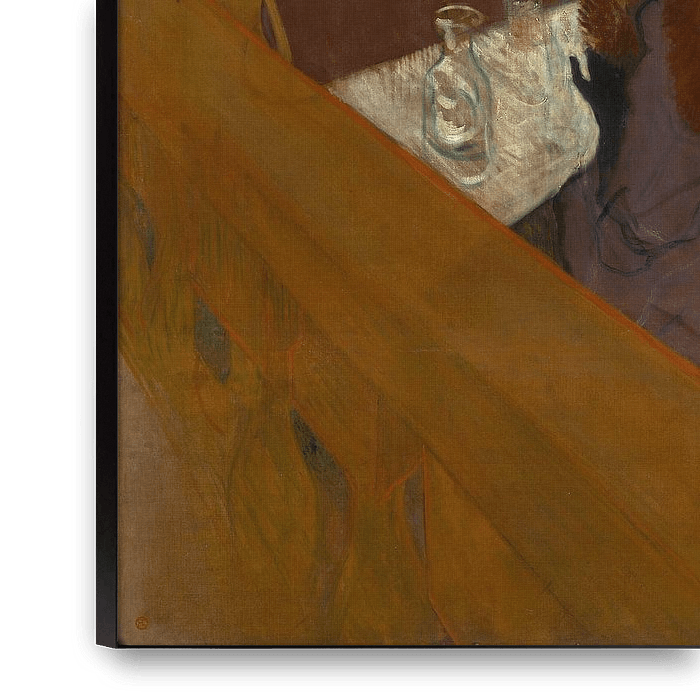
You can't see it in full detail right now, but you certainly will on your wall soon!
Scroll to zoom in, drag to move the artwork.
Drag with your finger to move the artwork.

Already filled more than 375,000 walls!

Get even more inspired
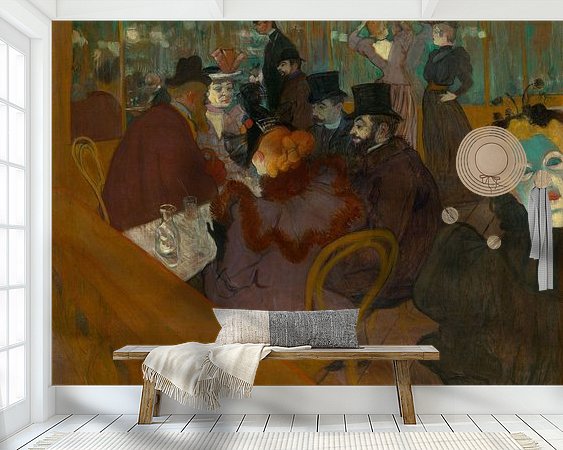
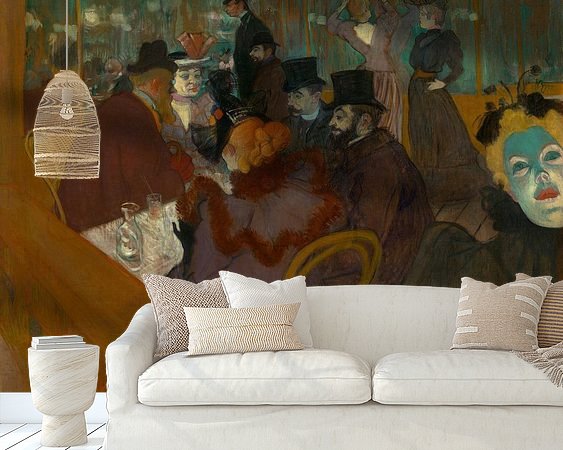
About ‘At the Moulin Rouge, Henri de Toulouse-Lautrec’
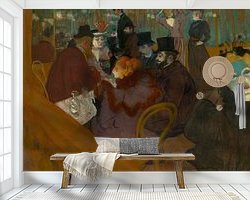
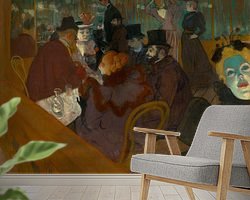
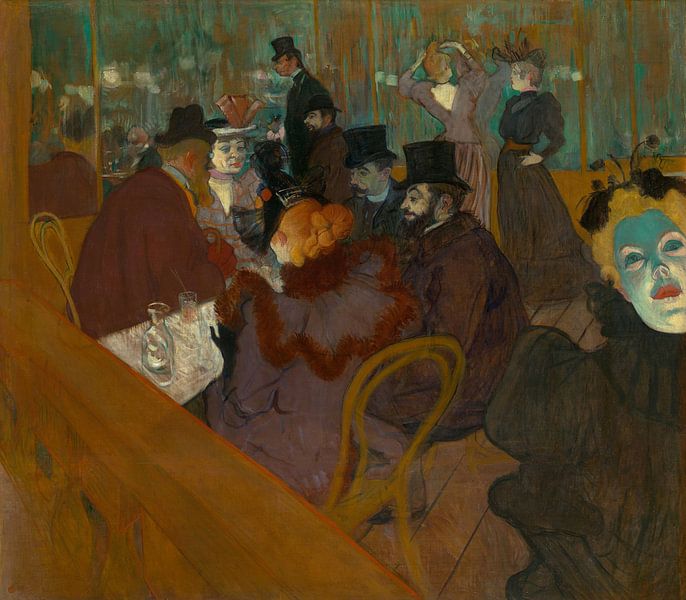
In At the Moulin Rouge Henri de Toulouse-Lautrec memorialized Parisian nightlife at the end of the nineteenth century. The painting is noted for its daring composition, dramatic cropping, and flat planes of strident color. A regular patron of the Moulin Rouge, one of the most famous cabarets of the Montmartre district, Toulouse-Lautrec here turned his acute powers of observation on the club’s other habitués. The flaming red-orange hair of the entertainer Jane Avril is the focal point of the central seated group. Preening in the greenish mirror in the background is the dancer La Goulue. The stunted figure of the aristocratic artist appears, as it often did in life, next to his devoted, much taller cousin, Dr. Gabriel Tapié de Céleyran. But it is the frozen, acid-green face of the dancer May Milton that dominates the canvas and haunts the action. The painting comprises two joined parts: a small main canvas and an L-shaped panel to the lower and right edges. The canvas was severed after the artist’s death, perhaps by his dealer (to make the composition less radical and more saleable), and restored sometime before 1914.
Colors
Discover our ArtFrame
The modern canvas alternative
Your chosen art on a textile print, stretched in an aluminum or wooden frame. Quick and easy to change for a fresh look and exactly as you want it.
- High-quality print
- Easily replaceable
- Acoustic function
- Large formats possible
Discover the Old Masters collection





Customer reviews
4.8/5

Related collections