



Art code

You can't see it in full detail right now, but you certainly will on your wall soon!
Scroll to zoom in, drag to move the artwork.
Drag with your finger to move the artwork.


Already filled more than 375,000 walls!

Get even more inspired
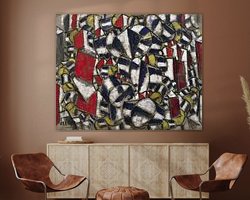
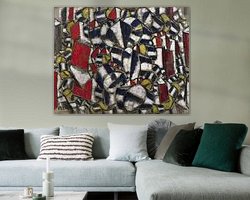
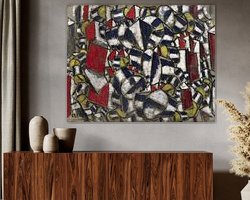
About ‘Fernand Léger. Shape contrast’
The painting Contrast of Forms (Contraste de Formes), created around 1913-1914, is among Fernand Léger's most radical and innovative works. During this period, Léger experimented intensively with cubism, but in the process he developed a visual language all his own. In Shape Contrast, everything revolves around the clash between geometric shapes, volumes and colours. Cylinders, cones and blocks seem to face each other in a dynamic field of tension. The show is largely abstracted: recognisable objects are dissolved into pure form and movement. The rhythm of round and angular elements evokes an almost mechanical energy, befitting the emerging modern, industrial era. At the same time, colour contrasts give the composition strength and clarity. Léger wanted to free painting from traditional perspectives and emotional expression, and explore how forms themselves can carry meaning and expression. Form contrast is therefore considered a key work within the modern avant-garde, which focuses on abstraction, rhythm and structure.
Colors
Discover our ArtFrame
The modern canvas alternative
Your chosen art on a textile print, stretched in an aluminum or wooden frame. Quick and easy to change for a fresh look and exactly as you want it.
- High-quality print
- Easily replaceable
- Acoustic function
- Large formats possible
Discover the Old Masters collection



Customer reviews
4.8/5
Related collections